Local Support, International Reach

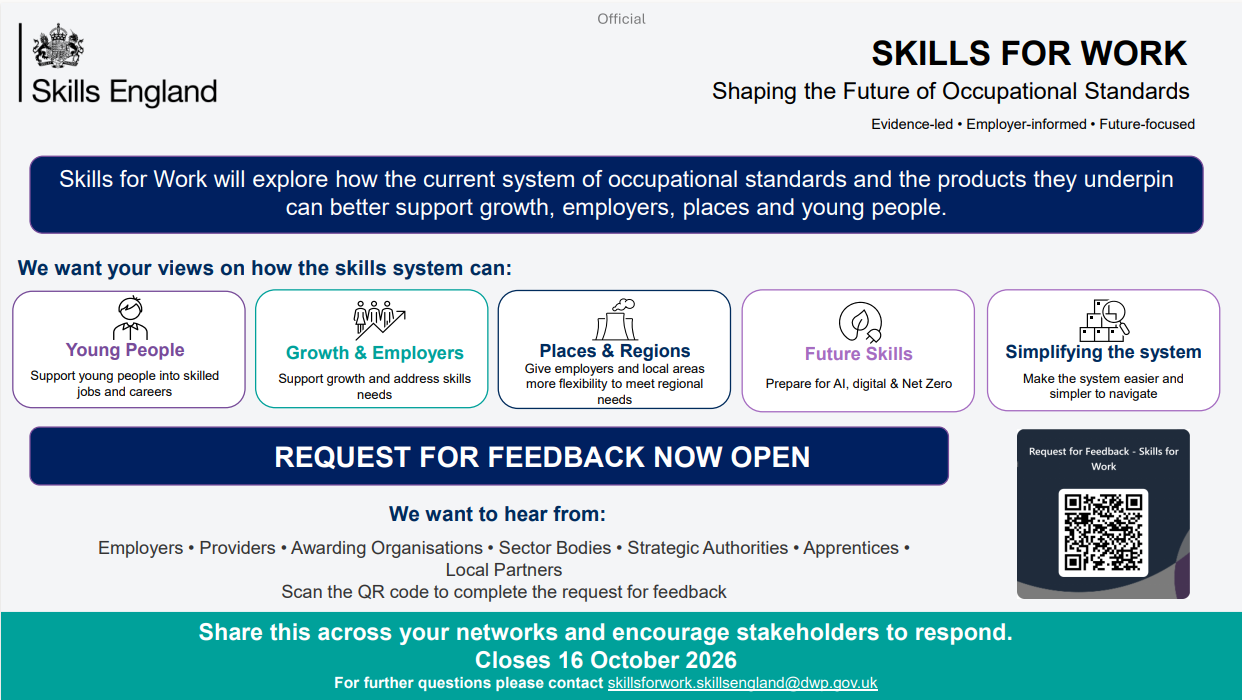
Occupational standards are at the heart of England’s technical education system, helping to ensure training meets employer needs. Our Skills for Work programme, led by our Board Chair Phil Smith, is considering how the standards and the products they underpin, are fit for the future, meet employer need, equip people for good jobs and careers and support the devolution agenda.
As part of this work, we are asking for your views on how occupational standards and the products they underpin can better support learners, employers and local economies. You can contribute via the form here.
Joanne Giles, Executive Director of the Greater Essex Local Skills Improvement Plan said, “We have a real opportunity to help shape the future of skills development through Skills for Work. The Greater Essex LSIP is gathering employer insight to ensure that skills provision reflects the evolving needs of industry, while Skills England is reviewing T Level and Apprenticeship standards to ensure they remain fit for purpose and aligned with the skills employers need both now and in the future.
“As leaders, employers, and industry representatives, your perspectives are invaluable. The decisions made through these reviews will influence future talent pipelines, workforce development, and the skills available to support business growth. If we want a skills system that truly meets the needs of our sectors, it is essential that our voices are part of the conversation.
“I would strongly encourage you to engage with this opportunity and share your views. Your input can help drive meaningful change and ensure future skills provision is shaped by those who know industry best.
“Thank you in advance for your support and involvement. Together, we can help create a skills system that delivers for employers, learners, and our wider economy.”
This programme will consider:
Read more latest news related to the Local Skills Improvement Plan here.
18.09.2026