Local Support, International Reach

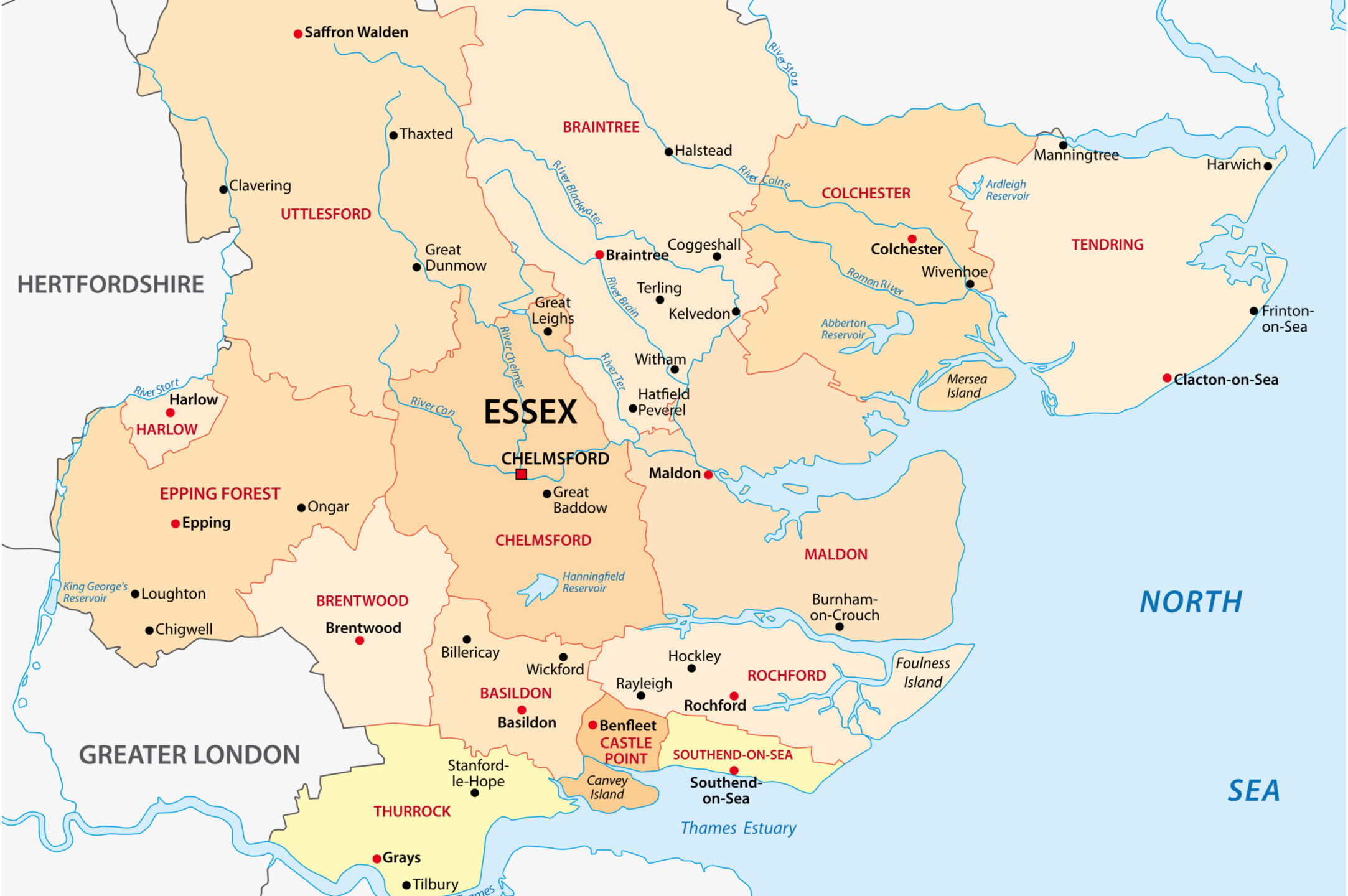
Devolution refers to the decentralisation of powers, decision-making and funding away from central government to local, democratically elected and accountable bodies. There are high-profile examples in metropolitan areas of England such as Greater Manchester and the West Midlands – and of course in London. These areas have elected Mayors and have concluded devolution deals with government. Several other areas, such as Cambridgeshire and Peterborough, have followed these three and the government’s intention is that eventually Mayors working with ‘mayoral strategic authorities’ in their areas will be the norm. Currently Essex is one of six areas chosen to be part of the government’s priority programme for devolution.
A consultation document published in July 2025 set out what devolution in Essex would look like.
Overlapping with devolution is a process of local government reform, or reorganisation (LGR). The two are sometimes conflated but are strictly separate; devolution was intended to happen first in Essex (in 2026) with LGR following by 2028. For LGR, the government has chosen from among four options put forward by Essex Councils to establish five new unitary authorities. These will replace the County Council, the two existing unitary councils of Southend and Thurrock and twelve district councils. More information about LGR, including details of the 5-unitary model, can be found here.
Under the original timetable agreed with government an election was to be held for a Mayor of Greater Essex in the Spring of 2026. ‘Greater Essex’ refers to the whole of the ceremonial county of Essex i.e. including Thurrock and Southend, which are unitary authorities, as well as the twelve districts which make up the rest of the county and for which Essex County Council is the upper tier authority. The county council, Southend and Thurrock would together form a Combined County Authority. This would be a partnership, with the three councils maintaining their own separate identities. Once local government has been reorganised in 2028 new unitary councils would replace the initial three as partners in the mayoral strategic authority. Elections for the new councils would take place, under current plans, in 2027.
However, the election for a Mayor has been put back to 2028 so the Mayor will now take up post at roughly the same time as LGR is finalised. He or she will from that time be working with a strategic authority made up not of the County, Southend and Thurrock but of five new unitary authorities.
The government’s White Paper on Devolution sets out the ambition for mayors and devolved areas. Essentially it will give local areas more control in a number of key areas, including local transport infrastructure, skills and local growth.
It should enable:
Faster decision making – improved service delivery, enabling faster approvals, reduced bureaucracy and the development of policies that are better aligned with local economic needs;
Improved business support and engagement – drawing upon investment from multiple sources to strengthen business support across Essex;
Local infrastructure investment – the ability to prioritise projects that are crucial for local businesses and lead to economic growth and job creation. This includes improved strategic transport planning, improving connectivity, tackling congestion and taking on bus franchising;
Inward investment and place promotion – enable private and public sectors to co-develop a joined-up approach to inward investment and place marketing, helping Greater Essex to stand out and compete with impact.
Essex Chambers of Commerce supports the principle of devolution for Essex and LGR but of course will want to see structures and arrangements which are simple for business to engage with, respond to business needs and generally work well for business. We are part of the new Greater Essex Business Board, which will be our main way of engaging with the mayoral authority, especially on economic issues, including skills, on which the Chambers has led on the production of the Local Skills Improvement Plan (LSIP) for Essex.
We encourage Chambers members to engage with us as the processes of devolution and LGR proceed. Please do contact Iain McNab, Head of Policy at Essex Chambers of Commerce if you have any comments or questions at any time or if specifically on skills get in touch with Joanne Giles, LSIP Director.